 Call (909) 365-5950
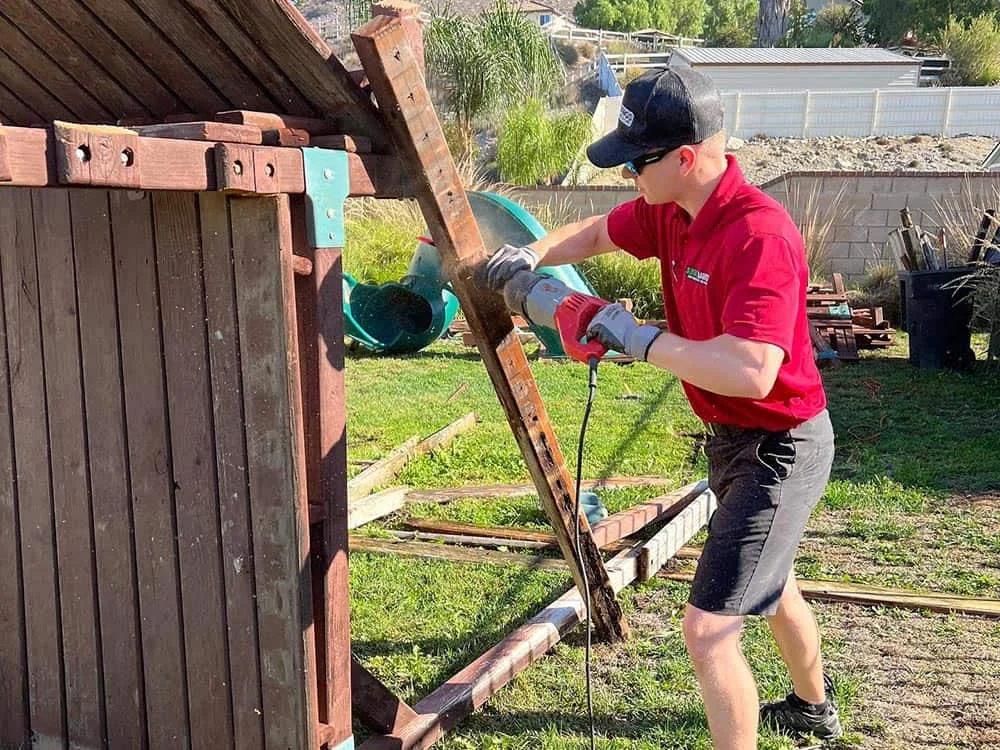
Separate reusable material, clean recyclables, ordinary debris, and anything potentially hazardous before loading day. Good sorting makes the volume easier to estimate and prevents one problem item from contaminating an otherwise recyclable load.
Build simple material zones
Use a dry, stable area with clear walking paths. Keep lumber, metal, clean cardboard, masonry, drywall, and mixed trash apart when practical. Remove protruding nails only when it can be done safely; otherwise mark and isolate the piece. Keep dust down using methods appropriate to the material, and do not sweep or disturb anything that may contain asbestos or lead.
| Material | Keep it useful by | Pause and ask when |
|---|---|---|
| Lumber | Keeping it dry and separate from trash | It is painted, treated, burned, or contaminated |
| Drywall | Separating clean offcuts from mixed demolition waste | There is mold, water damage, or an older texture/coating concern |
| Metal | Grouping manageable pieces and covering sharp edges | Items contain fuel, refrigerant, oil, or sealed components |
| Concrete and masonry | Keeping loads small enough for safe equipment and weight limits | Rebar, soil contamination, or access changes the handling plan |
| Paint, lamps, batteries | Leaving containers closed and intact | Always—these require a separate approved route |
Universal and hazardous waste stays out of the mixed pile
CalRecycle lists fluorescent lamps, mercury-containing switches and thermostats, and batteries among universal wastes that are generally not allowed in solid-waste landfills. Older buildings can also present asbestos or lead concerns. Stop work and seek qualified assessment when the material is unknown; a hauling crew is not a substitute for testing or abatement.
Estimate volume without pretending weight does not matter
Volume-based pricing is easy to picture, but dense materials such as concrete, tile, plaster, and soil can reach vehicle or facility weight limits before a truck looks full. List dense materials separately and share rough dimensions. Photos help, but an on-site quote is the point where access, material type, and load limits can be confirmed together.
Handoff checklist
- Confirm which materials the crew will accept.
- Identify anything painted, treated, wet, burned, or chemically contaminated.
- Keep vehicle and worker access clear.
- Discuss elevator, gate, permit, or loading-zone rules.
- Ask where separated materials are expected to go.
For approved, non-hazardous material, review Junk Dawgs’ construction debris removal service. For demolition itself, confirm scope, utilities, permits, and material testing before work starts.
Sources
- CalRecycle: Construction and Demolition Debris Recycling — common materials, diversion, and universal-waste cautions. Retrieved October 17, 2026. California.
- California DTSC: Household Hazardous Waste — handling and program context. Retrieved October 17, 2026. California.