 Call (909) 365-5950
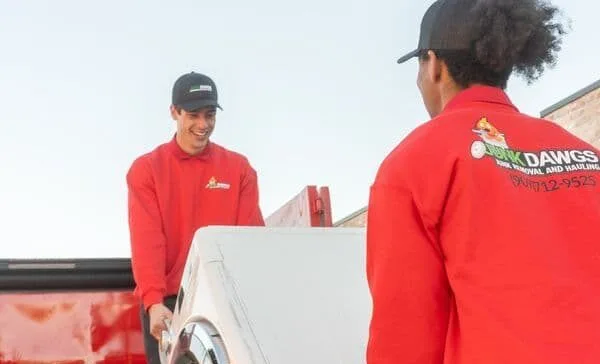
Empty the appliance, make a clear path, and leave refrigerant lines and sealed systems alone. The pickup team needs accurate dimensions, safe access, and advance notice of stairs, tight turns, or disconnected utilities.
Start with the route, not the refrigerator
Measure the appliance at its widest and deepest points, then measure every doorway, hallway turn, stair landing, gate, and elevator on the route out. Note whether doors or handrails would need to be removed. A crew can plan around a narrow opening; finding it after the appliance is already moving wastes time and creates avoidable risk.
Use this pickup checklist
- Remove food, shelves, drawers, and loose parts.
- Defrost freezers early enough to drain and dry.
- Disconnect water only if you know the shutoff and connection; otherwise arrange qualified help.
- Keep children and pets away from the work path.
- Photograph scratches or flooring concerns before movement begins.
- Tell the hauler about stairs, elevators, steep drives, or long carries.
Do not cut refrigerant lines
Refrigerators, freezers, room air conditioners, and dehumidifiers may contain regulated refrigerants. The U.S. Environmental Protection Agency says owners should not tamper with appliances before disposal, including cutting refrigerant lines or removing compressors. The final disposal chain must ensure refrigerant is recovered correctly. Ask how the hauler routes refrigerant-containing appliances and whether the receiving facility handles the required recovery.
| If the appliance is… | Best first call | What to confirm |
|---|---|---|
| Working and recently replaced | Retailer or utility | Take-back eligibility, condition rules, and timing |
| Non-working but intact | Qualified hauler or municipal program | Refrigerant handling and access |
| Leaking, damaged, or partly dismantled | Local waste authority or qualified technician | Safe containment and accepted condition |
Questions worth asking before pickup
Ask whether labor, stairs, and disposal are included in the quote; whether the crew disconnects water or gas lines; what happens if the appliance is larger than described; and where refrigerant-containing units are taken. A clear answer is more useful than a vague claim that everything is “recycled.”
If you would rather have the lifting handled, review Junk Dawgs’ appliance removal service and call with the appliance type, dimensions, location in the home, and access notes.
Sources
- U.S. EPA: Appliance Disposal — consumer guidance and refrigerant requirements. Retrieved October 17, 2026. United States.
- U.S. EPA: Homeowners and Consumers FAQ — do not tamper with refrigerant-containing appliances. Retrieved October 17, 2026. United States.